Complete 7-Day Machame Route Itinerary
Before
You Start Your Climb
If you
are traveling to Tanzania for your Kilimanjaro climb, we recommend arriving at
least one day before your trek begins. This gives you enough time to rest after
your flight, attend a pre-climb briefing, complete a gear check, and prepare
for the adventure ahead. At Africa Safari Peak, we welcome our guests at
Kilimanjaro International Airport (JRO) and provide a comfortable transfer to
their hotel in Moshi. Before the climb, our experienced mountain team will meet
with you to review the itinerary, inspect your equipment, and answer any
questions to ensure you are fully prepared for the journey.
Day 1:
Hotel to Machame Gate (1,800 m / 5,905 ft) – Machame Camp (2,835 m / 9,301 ft)
Elevation
Gain: 1,035 m (3,396
ft)
Distance: 11 km (6.8 miles)
Hiking Time: 4–7 Hours
Habitat: Rainforest
Your
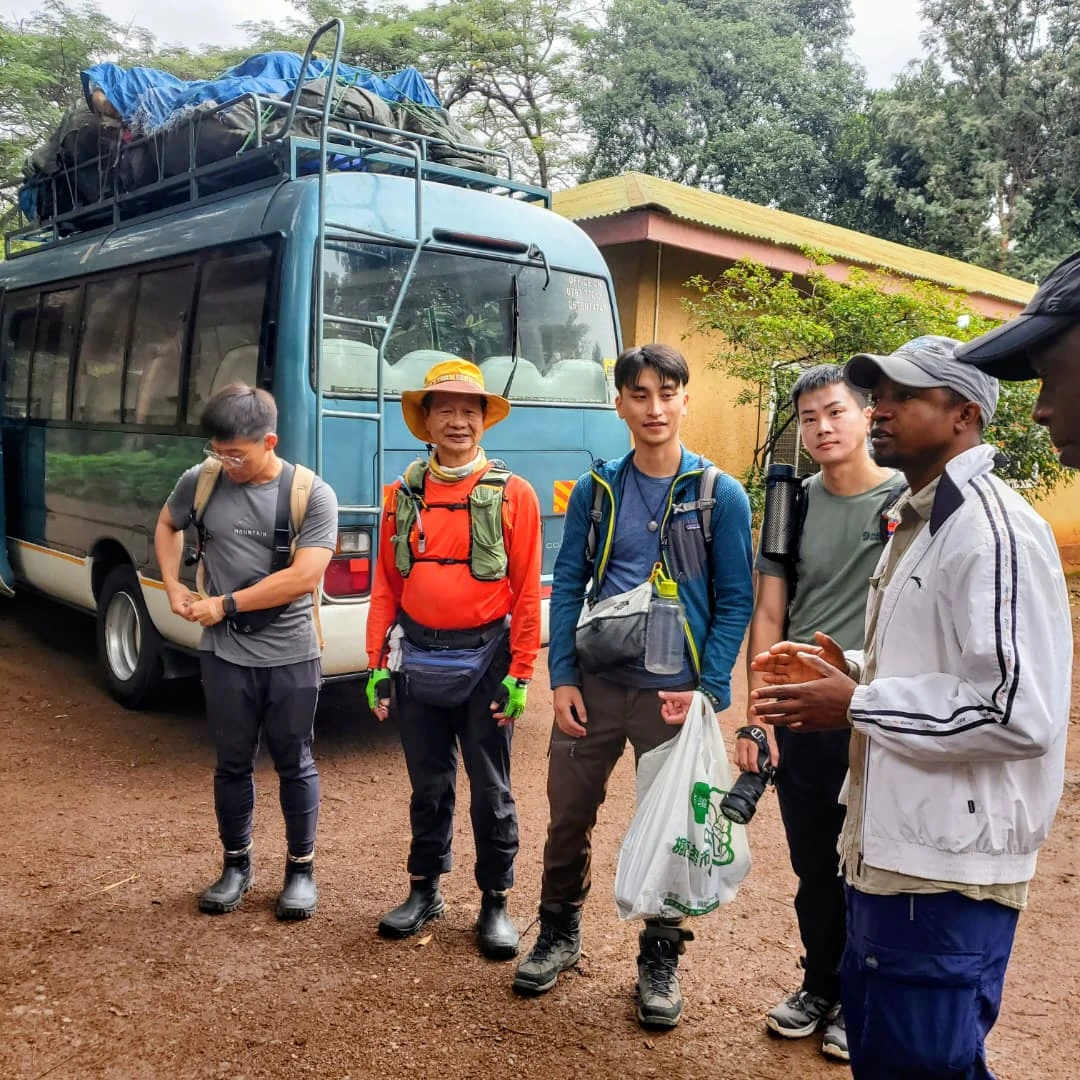
adventure begins with excitement as our team picks you up from your hotel in
Moshi after breakfast. Instead of heading straight to the mountain, we first
drive to our office, where you will meet your mountain crew and receive a warm
welcome from the Africa Safari Peak family. This is a great opportunity to get
to know your guides, ask any last-minute questions, enjoy a cup of tea or
coffee, and complete a final equipment check to make sure everything is ready
for the climb ahead.
Once
everyone is prepared, we begin the drive to Machame Gate, the starting
point of one of Kilimanjaro's most scenic routes. After arriving at the gate,
you will enjoy a freshly prepared lunch while our guides and office team
complete the required registration with Kilimanjaro National Park (KINAPA).
Before setting off, you will also have time to take photographs, explore the
surroundings, and soak in the excitement as your Kilimanjaro adventure
officially begins.
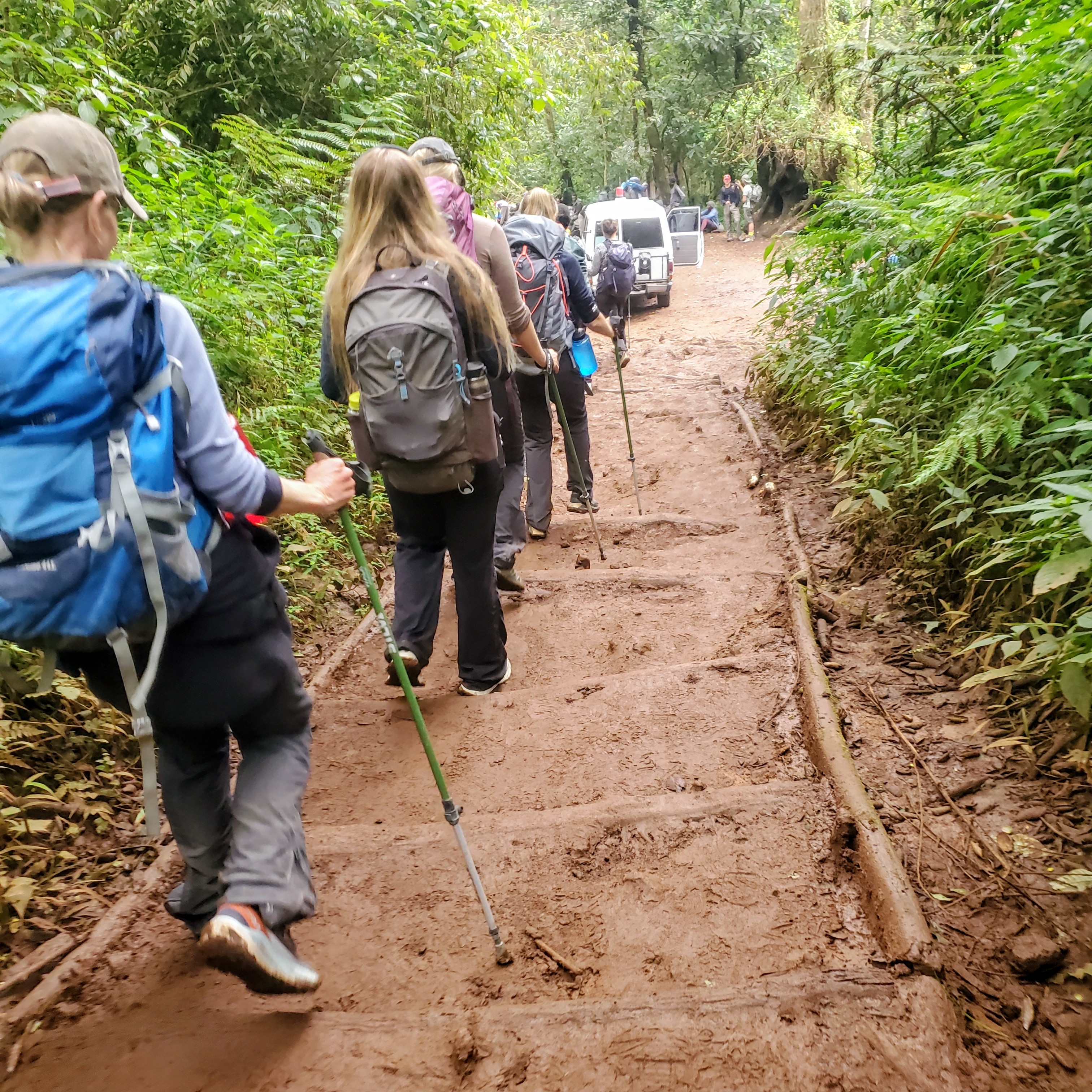
The trail
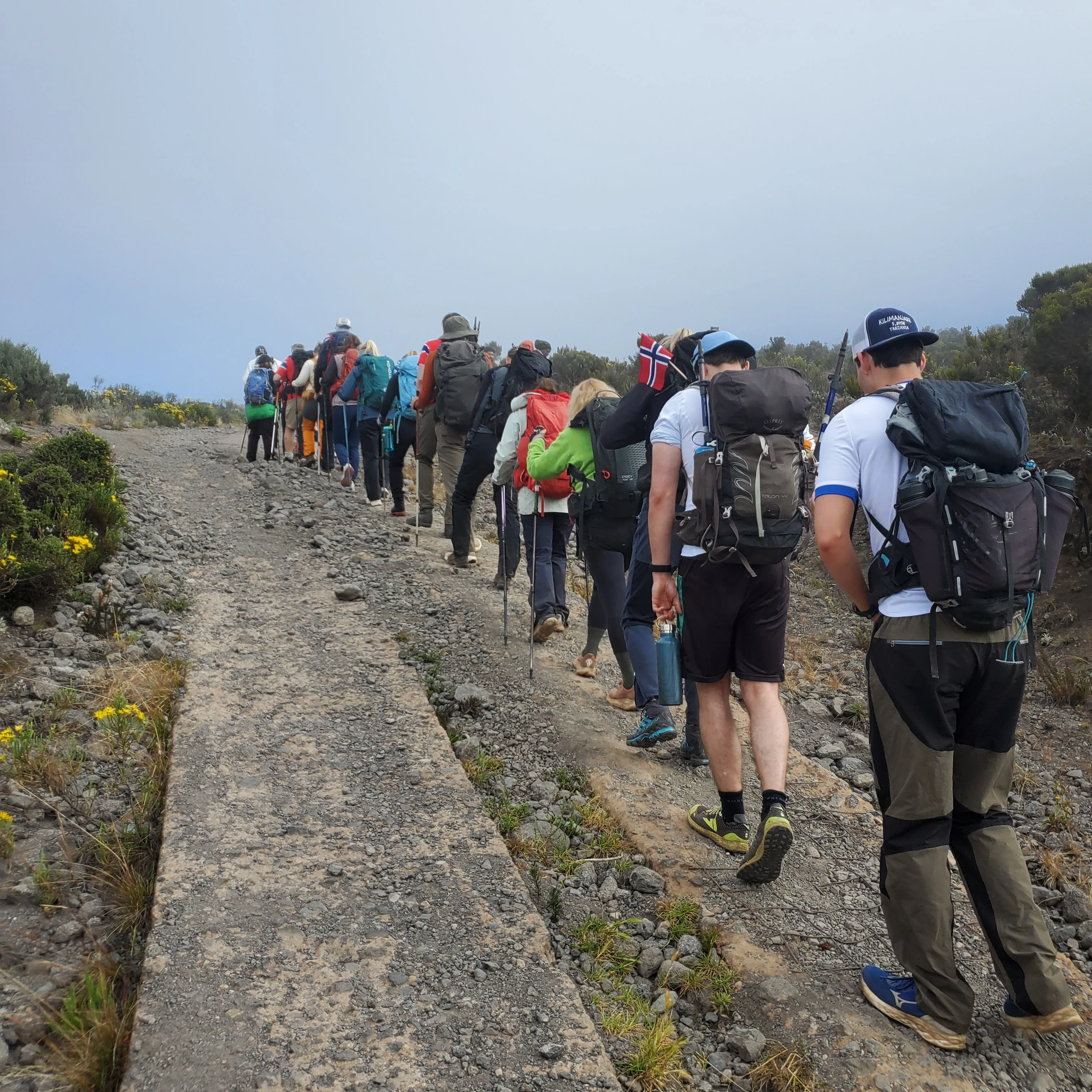
starts beneath the dense canopy of the rainforest, where the air is cool,
fresh, and rich with the sounds of nature. This section of the mountain is home
to towering trees, giant ferns, colorful wildflowers, and a wide variety of
birds. If you are lucky, you may even spot playful blue monkeys or the
striking black-and-white colobus monkeys moving through the forest. The
path can be muddy, especially during the rainy seasons, but the peaceful
atmosphere and beautiful scenery make this one of the most enjoyable days of
the entire trek.
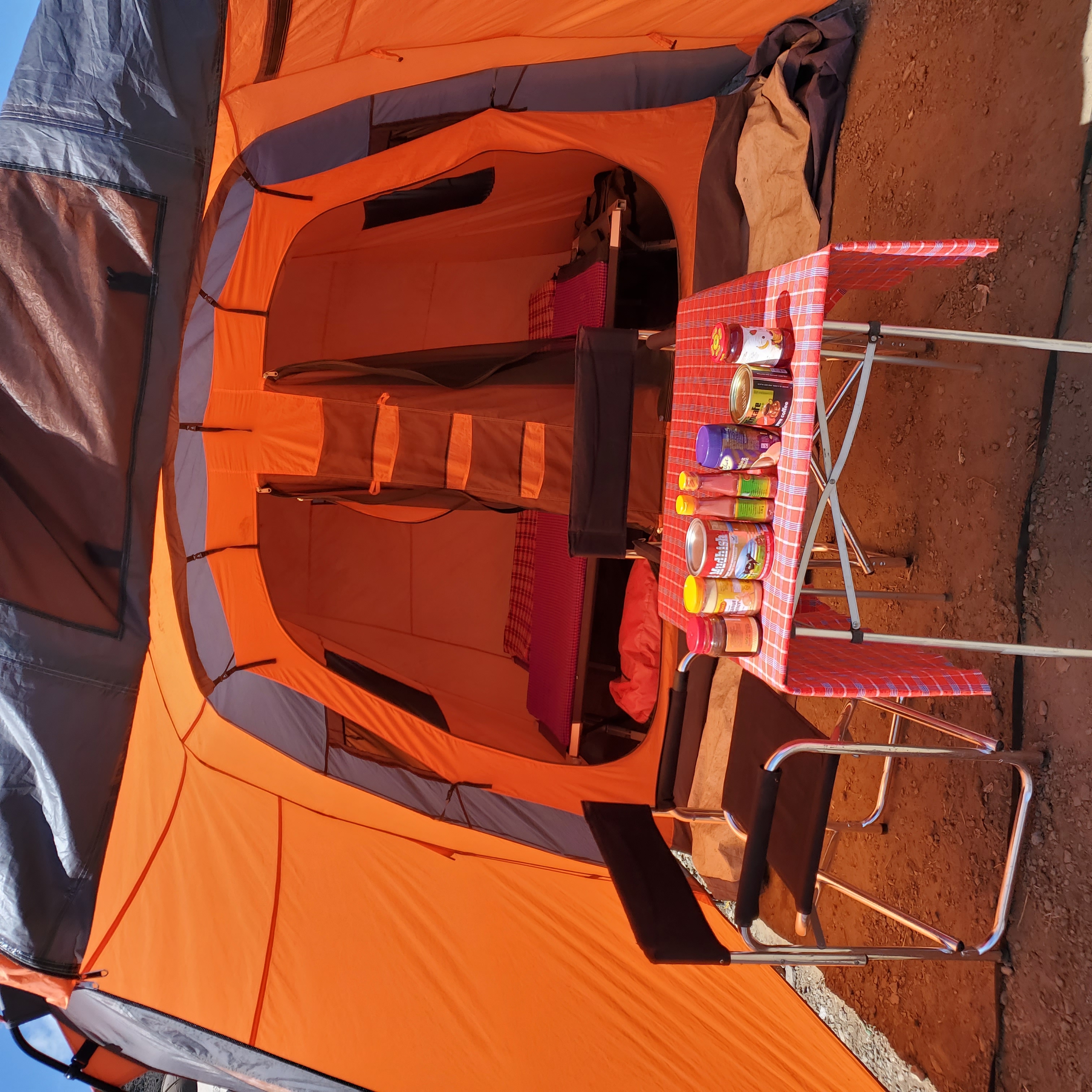
After
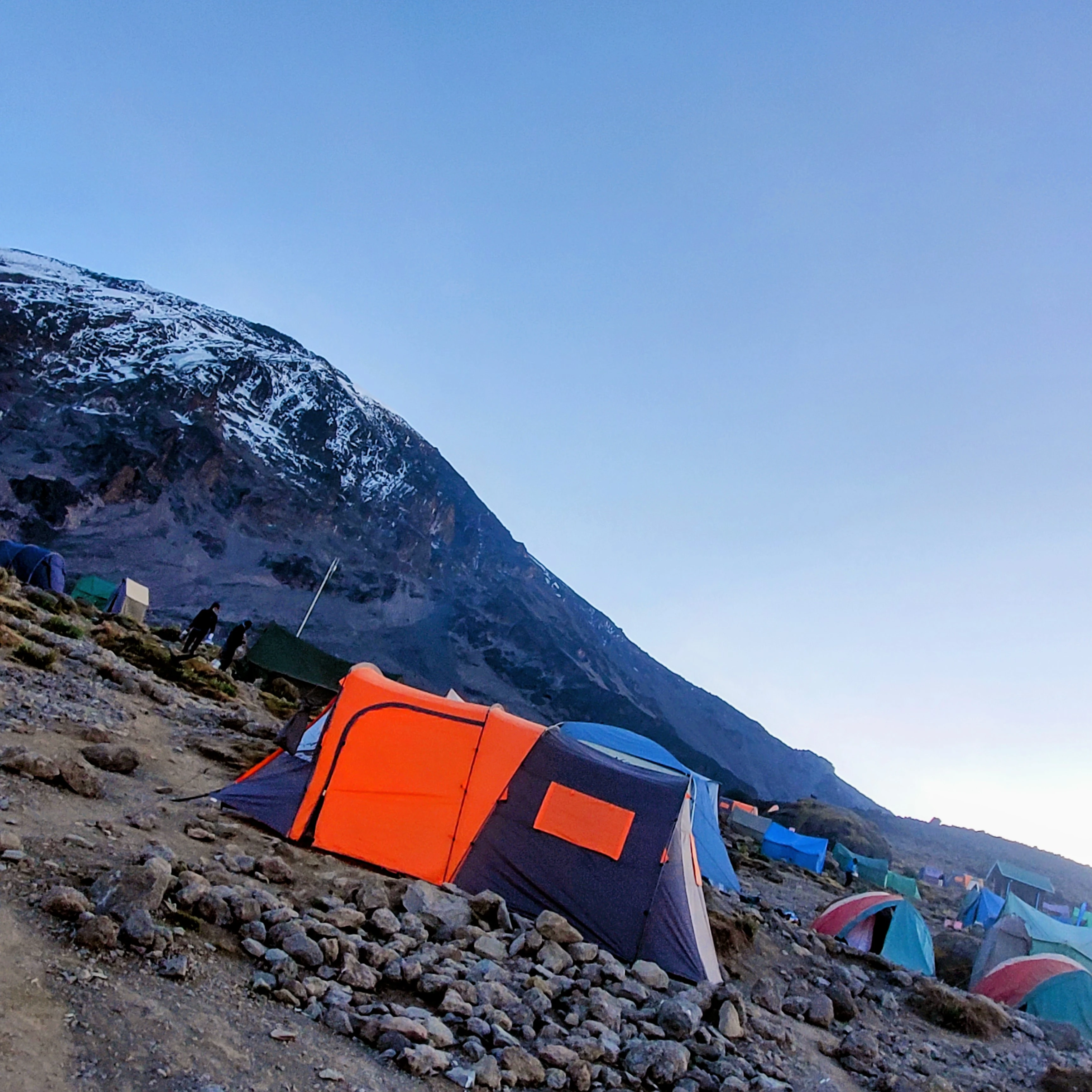
approximately four to seven hours of hiking, you will arrive at Machame Camp,
where our mountain crew will be waiting to welcome you with warm smiles and
genuine hospitality. By the time you arrive, your tent will already be set up,
allowing you to settle in and relax after the day's hike. You will be provided
with warm water to freshen up before enjoying a delicious, freshly prepared
dinner served by our mountain team.
Later in the
evening, our lead guide will carry out a routine health check using a pulse
oximeter to monitor your oxygen saturation and heart rate. This simple
daily assessment helps us monitor how your body is responding to the altitude
and allows our guides to identify any early signs of altitude-related illness.
Before the day ends, your guide will also brief you on the next day's trek,
including the expected weather, what clothing to wear, what essentials to keep
in your daypack, and what to expect on the trail. After a rewarding first day
on the mountain, you can relax, enjoy the peaceful surroundings of the
rainforest, and get a good night's sleep as you prepare for the adventure
ahead.
Day 2:
Machame Camp (2,835 m / 9,301 ft) to Shira Cave Camp (3,750 m / 12,303 ft)
Elevation
Gain: 915 m (3,002
ft)
Distance: 6 km (3.1 miles)
Hiking Time: 4–6 Hours
Habitat: Moorland
Your second
day on Mount Kilimanjaro begins early in the morning with a friendly wake-up
call from one of our mountain waiters. If you hear someone gently calling your
name outside the tent, don't be surprised it's simply our team letting you know
that it's time to start another exciting day on the mountain. Soon after, warm
water will be brought to your tent so you can wash your face, brush your teeth,
and freshen up before breakfast.
After
packing your duffel bag and preparing your daypack, you will head to the dining
tent where a freshly prepared breakfast is waiting for you. Our professional
mountain chefs serve a nutritious meal to give you the energy needed for the
day's hike. Depending on the day's menu, breakfast may include chapati, eggs,
sausages, fresh fruit, porridge, toast, pancakes, tea, coffee, or hot
chocolate, ensuring you begin the day feeling energized and ready for the trail
ahead.
Leaving
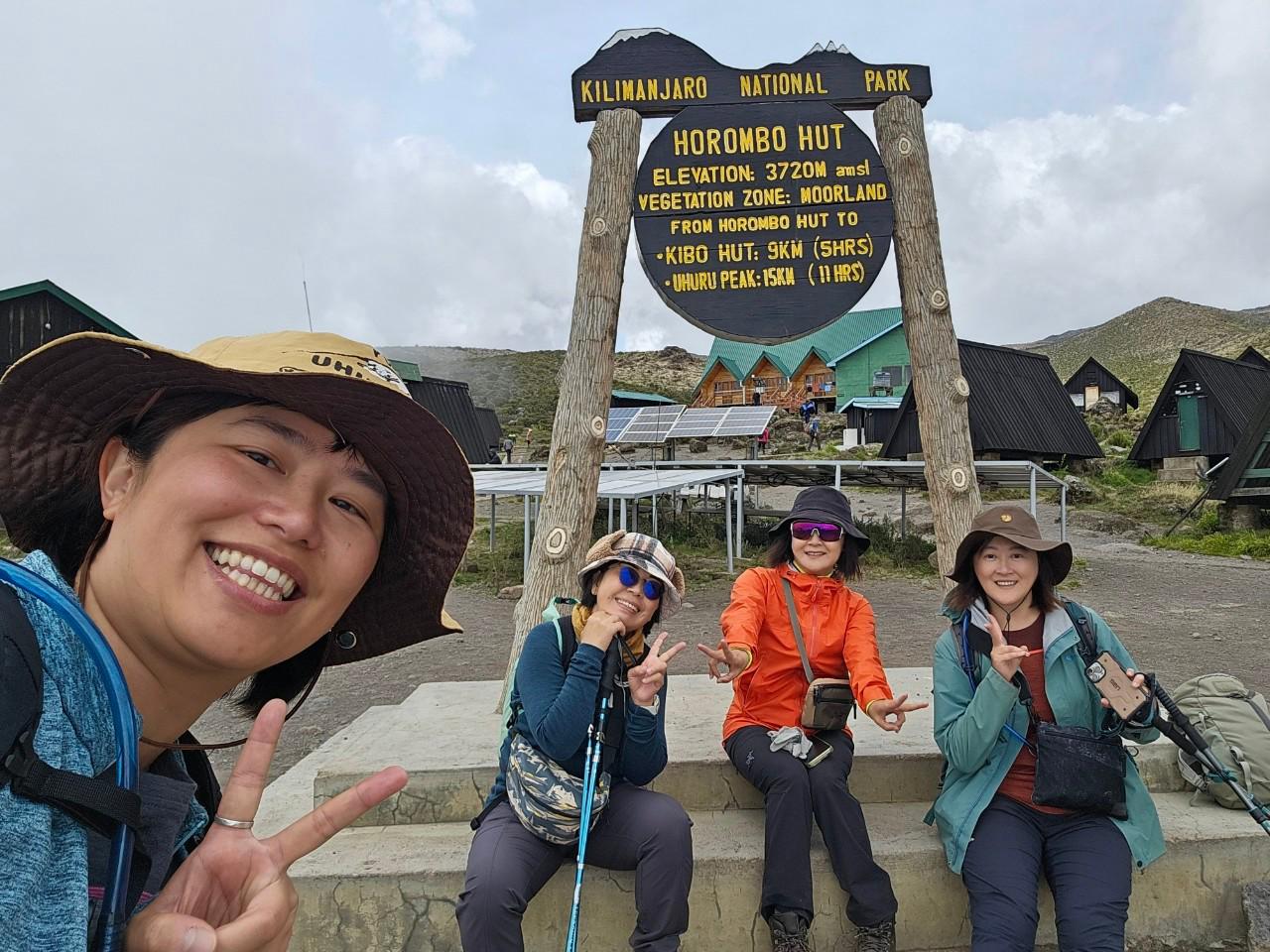
Machame Camp behind, the landscape gradually changes as you climb out of the
rainforest and enter the beautiful moorland zone. The dense forest gives way to
open hills covered with giant heathers, volcanic rocks, and unique alpine
vegetation found only on high mountains. As the trail gains elevation, the
trees slowly disappear, revealing wider views of the surrounding valleys and
distant mountain ridges.
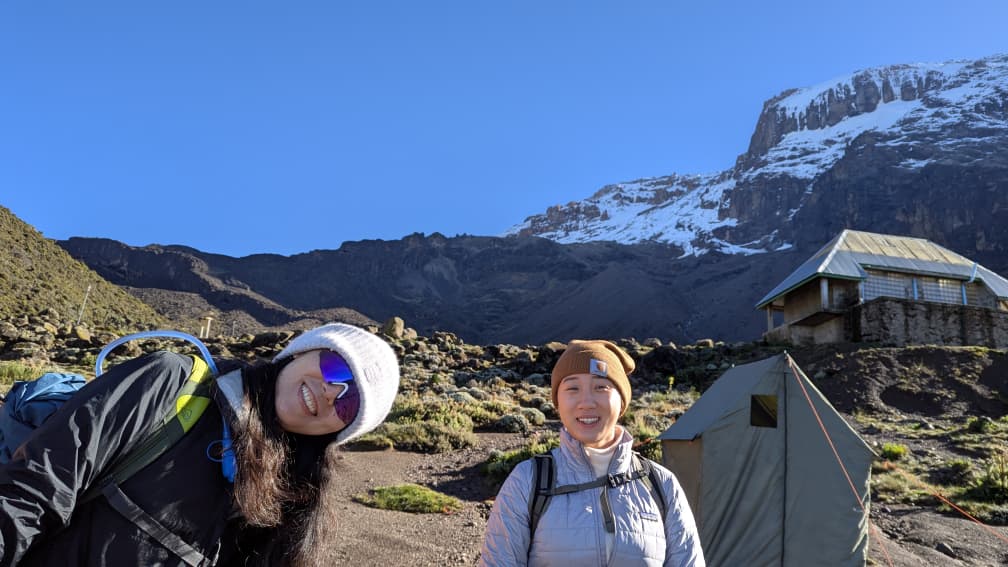
This is also
the day when Mount Kilimanjaro truly begins to reveal its beauty. As the
weather clears, you will enjoy your first clear views of Kibo Peak, the highest
volcanic cone on the mountain and home to Uhuru Peak, your final destination.
The scenery becomes more dramatic with every step, offering countless
opportunities to stop, admire the landscape, and capture memorable photographs
along the way.
After
reaching Shira Cave Camp, you will have time to relax and celebrate another
successful day on the mountain. If you would like to take photos around the
camp, this is one of the best places to do so, with spectacular views
stretching across the Shira Plateau. Our team will welcome you with hot drinks,
followed by a freshly prepared lunch, giving you time to rest and regain your
energy.
Later in the
afternoon, climbers who feel well and are encouraged by their guide may take
part in a short acclimatization hike of approximately 1 kilometer to Shira
Cave before returning to camp. This gentle walk helps your body continue
adapting to the altitude while allowing you to enjoy even more impressive views
of the mountain.
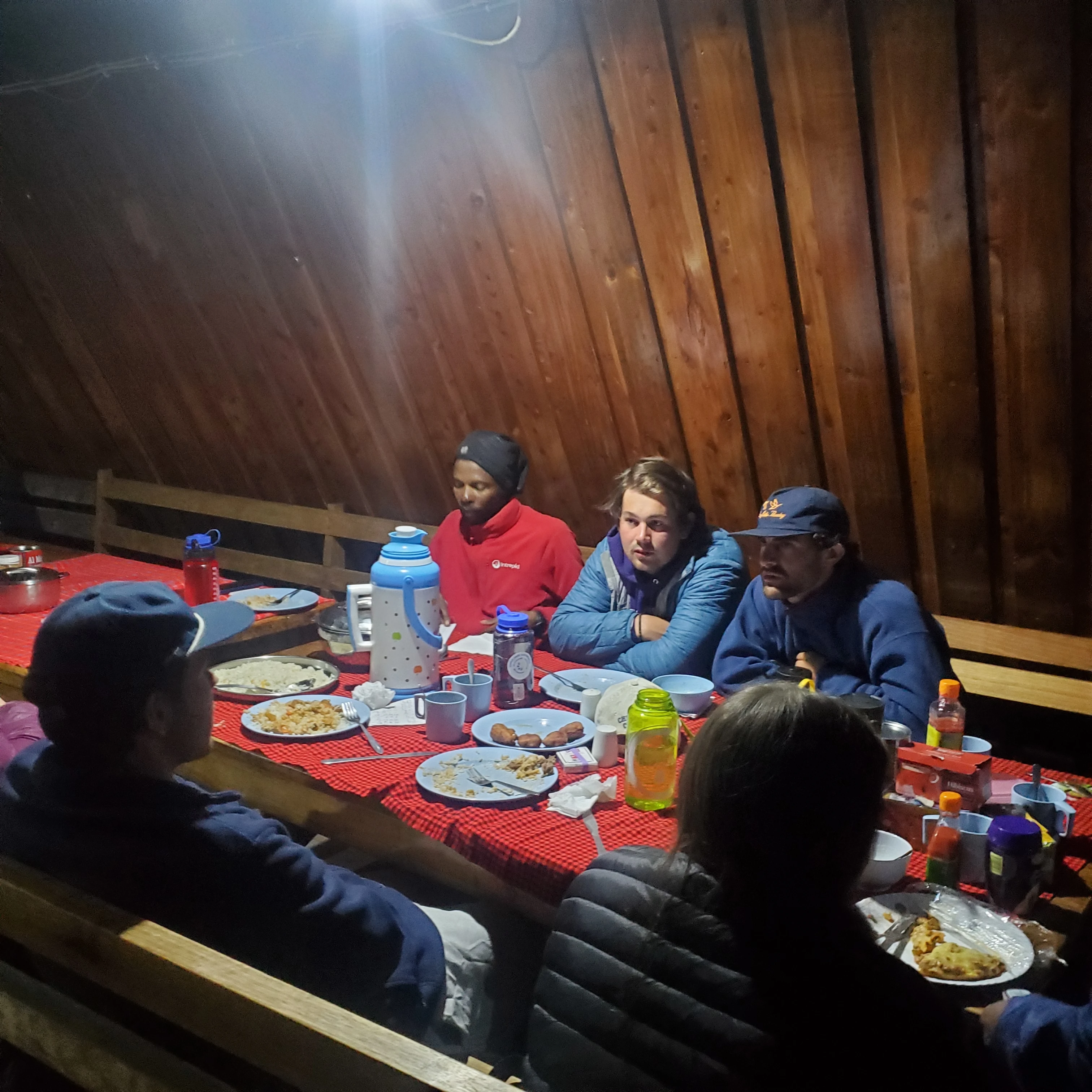
Back at
camp, a delicious dinner will be served before your lead guide conducts the
evening briefing. During this session, guide will take time to check your
health and you will learn about the next day's trek, expected weather
conditions, what clothing to wear, and which essential items to carry in your
daypack. After another rewarding day on Kilimanjaro, you can settle into your
tent for a well-earned night's rest, ready for the adventure that awaits
tomorrow.
Day 3:
Shira Cave Camp (3,750 m / 12,303 ft) to Lava Tower (4,630 m / 15,190 ft) to
Barranco Camp (3,976 m / 13,044 ft)
Elevation
Gain: 880 m (2,887
ft)
Elevation Loss: 654 m (2,146 ft)
Distance: 10 km (6.2 miles)
Hiking Time: 6–8 Hours
Habitat: Alpine Desert
After
another restful night on the mountain, your day begins with a warm breakfast
prepared by our mountain chefs before you set off for one of the most important
days of the Machame Route. Today's trek is not only about covering distance it
is designed to help your body become more comfortable at higher elevations
before descending to sleep at a lower altitude.
Leaving
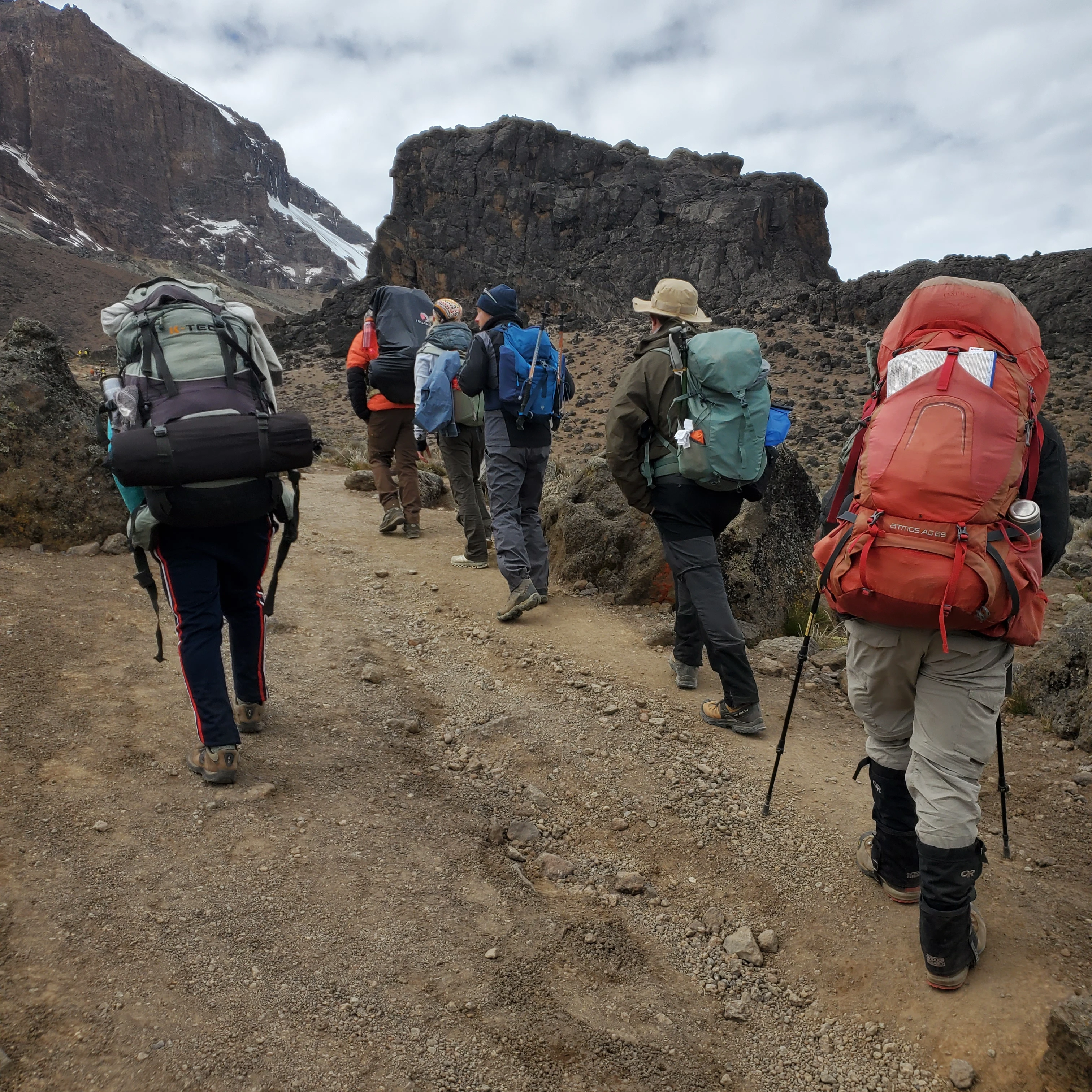
Shira Cave Camp, the trail gradually climbs through the rugged alpine desert.
The landscape becomes quieter and more dramatic, with volcanic rocks, wide-open
mountain views, and very little vegetation. As you gain altitude, you will
notice the air becoming cooler and thinner, making it even more important to
maintain a slow, steady pace while following your guide's instructions.
The main
destination of the day is Lava Tower, a striking volcanic rock formation
standing at approximately 4,630 meters (15,190 feet) above sea level.
Reaching this elevation is an important part of the acclimatization process,
allowing your body to experience the higher altitude before descending to sleep
at Barranco Camp. This "climb high, sleep low" strategy is one
of the reasons the Machame Route has such a strong summit success rate.
Lunch on
this day is more flexible than on the previous days and will be planned
together with your guide based on your hiking pace and the day's progress. You
may choose to enjoy a freshly prepared hot lunch at Lava Tower before
descending to Barranco Camp, or continue with a packed lunch and have your main
hot meal after arriving at Barranco Camp.
In most
cases, climbers hiking in groups of three or more, or those moving at a slower
pace, usually have lunch at Lava Tower, as they naturally reach the area around
midday. Climbers with a faster pace often carry a packed lunch, giving them
enough time to reach Barranco Camp earlier, where a freshly prepared hot meal
will be waiting. Whichever option suits your pace, our guides will help you
choose the best plan to keep your climb comfortable while ensuring you benefit
from the day's important acclimatization experience.
After
spending time at Lava Tower, the trail descends steadily into the beautiful
Barranco Valley. As you lose elevation, breathing often becomes more
comfortable, and the scenery changes once again. The route passes through
impressive volcanic landscapes before reaching the famous giant groundsels and
senecio plants that surround Barranco Camp, creating one of the most
scenic campsites on Mount Kilimanjaro.
Upon arrival
at camp, our team will welcome you and show you to your tent, where warm water
will be provided so you can freshen up and relax after the day's trek. Later in
the evening, a delicious dinner will be served before your lead guide holds the
nightly briefing, explaining the next day's adventure, the famous Barranco
Wall, the expected weather conditions, and everything you need to prepare for
another exciting day on Africa's highest mountain.
Day 4:
Barranco Camp (3,976 m / 13,044 ft) to Karanga Camp (3,995 m / 13,106 ft)
Elevation
Gain: 19 m (62 ft)
Distance: 5 km (3.1 miles)
Hiking Time: 4–5 Hours
Habitat: Alpine Desert
Your day
begins early with another delicious breakfast prepared by our mountain chefs
before you leave Barranco Camp at around 7:00 to 8:00 a.m. Today's trek is
shorter than the previous day, but it includes one of the most exciting
highlights of the entire Machame Route, the famous Barranco Wall.
As you
approach the wall, it may look steep and intimidating from below, but there is
no need to worry. With the guidance of our experienced mountain guides, you
will climb it one careful step at a time. No technical climbing skills or
special equipment are required. Your guide will always be nearby, showing you
the best route and offering assistance whenever needed, allowing you to enjoy
the experience with confidence.
One of the
most memorable points along the climb is the famous Kissing Rock, a
narrow section where you naturally move close to the rock face as you make your
way past. It is one of the best-known landmarks on the Barranco Wall and a
favorite place for climbers to capture memorable photos while enjoying
spectacular views of the mountain.
As you
continue higher, the scenery becomes even more impressive. The summit of Kibo
Peak appears much closer, giving you one of the clearest views of the
highest point on Mount Kilimanjaro so far. The surrounding valleys, dramatic
cliffs, and rugged volcanic landscape provide countless opportunities to stop,
catch your breath, and take some incredible photographs.
After
completing the Barranco Wall, the trail becomes gentler as you continue toward Karanga
Camp. Upon arrival, our mountain crew will already have lunch prepared for
you. After enjoying a well-deserved meal, you will have time to relax and
recover before the evening. Karanga Camp is also one of the places where you
may be able to access a mobile network, giving you the opportunity to briefly
connect with family and friends if you wish.
Later in the
afternoon, the camp comes alive as our mountain crew often gathers for a fun
and energetic warm-up, singing traditional mountain songs and celebrating
another successful day on Kilimanjaro. It is a wonderful opportunity to share
laughter, learn a little about Tanzanian mountain culture, and create
unforgettable memories with the team supporting your climb.
As the
evening approaches, you will enjoy another freshly prepared dinner before
joining your lead guide for the daily briefing. During the briefing, you will
learn about the next stage of the trek to Barafu Camp, receive advice on what
to wear, what to pack in your daypack, and how to prepare for the most
important part of your adventure.
Day 5:
Karanga Camp (3,995 m / 13,106 ft) to Barafu Camp (4,673 m / 15,331 ft)
Elevation
Gain: 678 m (2,224
ft)
Distance: 4 km (2.5 miles)
Hiking Time: 3–4 Hours
Habitat: Alpine Desert
As usual,
your day begins with a freshly prepared breakfast before leaving Karanga
Camp. Since today's hiking distance is relatively short, there is no need
for an early start. Most climbers leave camp between 8:30 and 9:00 a.m.,
giving you a relaxed morning before continuing toward Barafu Camp, the
final base camp before your summit attempt.
The trail
climbs steadily through the alpine desert, where the landscape becomes even
more rugged and rocky. Vegetation is now almost nonexistent, replaced by
dramatic volcanic terrain and breathtaking mountain views. Along the way, you
will enjoy some of the best views of Mawenzi Peak, Kilimanjaro's
second-highest volcanic cone, standing proudly against the African sky. As you
continue climbing, the summit of Kibo Peak also feels much closer,
reminding you that you are only one camp away from the highest point in Africa.
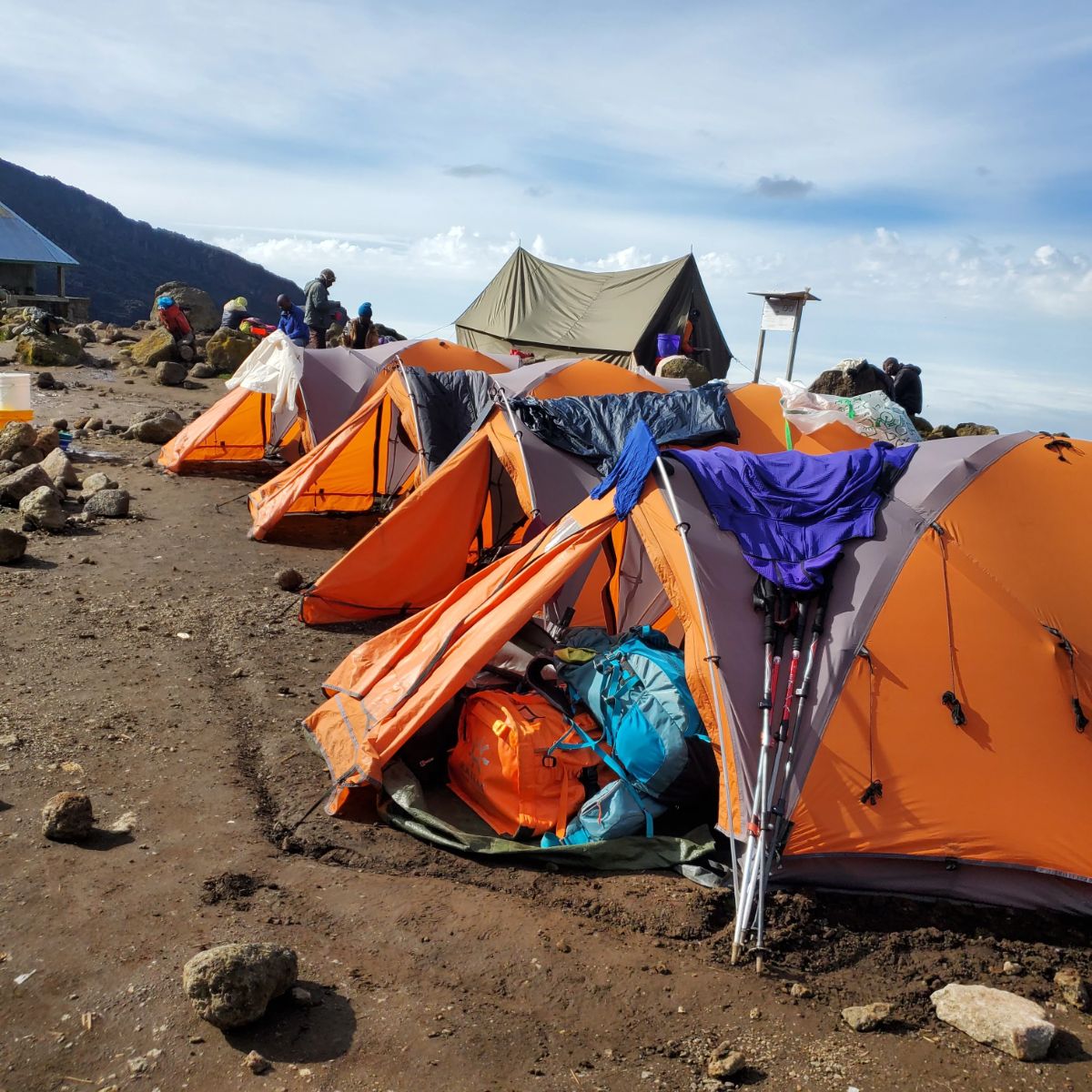
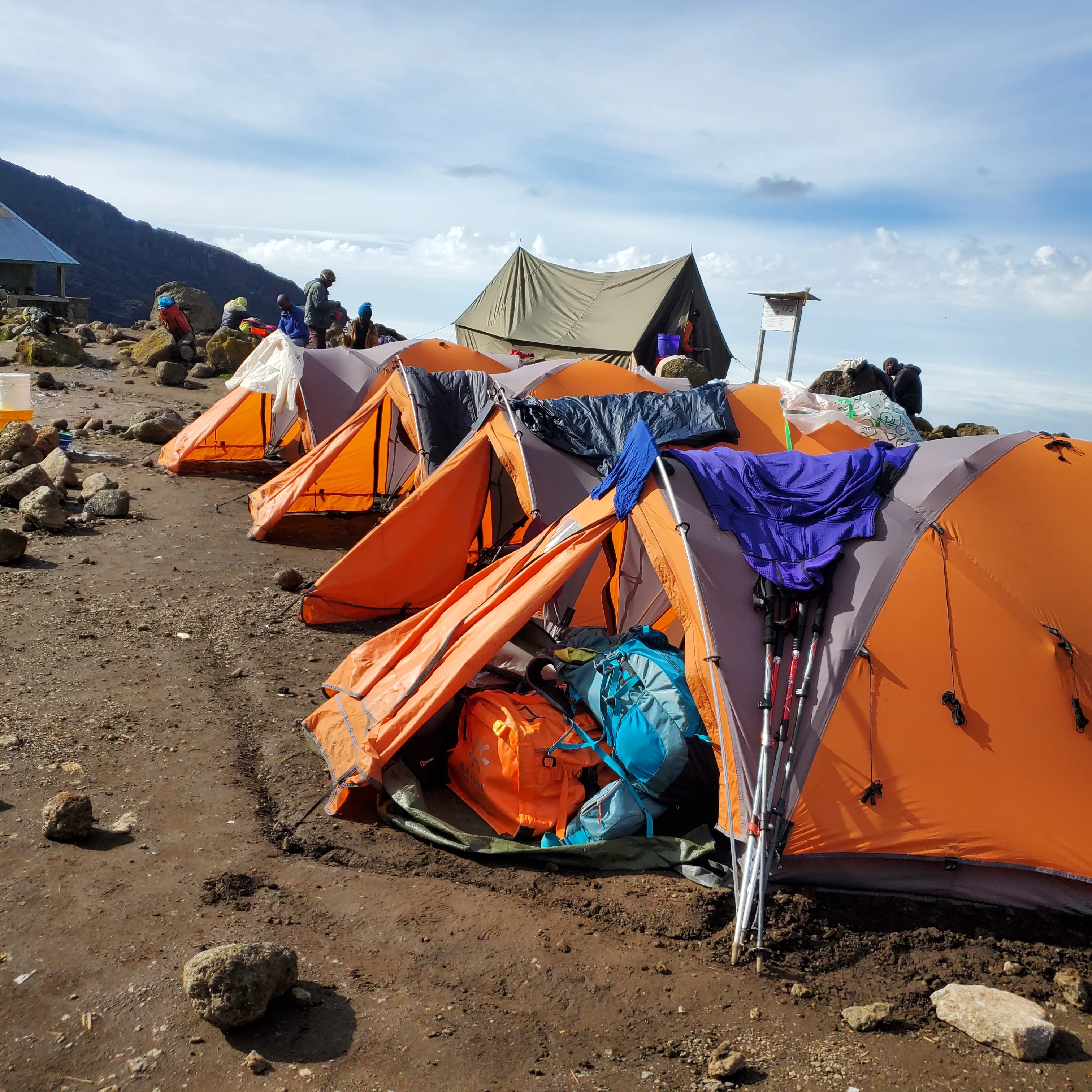
After
arriving at Barafu Camp, our mountain crew will already have your tent
prepared and a freshly cooked lunch waiting for you. This is not a day for long
walks or extra activities. Instead, you will spend the afternoon resting,
drinking plenty of water, and allowing your body to recover before the night's
summit climb. Many climbers choose to sleep for a few hours, as the summit
attempt begins around midnight.
Later in the
evening, you will wake up for an early dinner before meeting your lead guide
for one of the most important briefings of the entire expedition. During this
session, your guide will explain every stage of the summit climb, including the
route, expected weather conditions, the clothing you should wear, the essential
items to carry in your daypack, and how to manage your energy throughout the
night.
This
briefing is extremely important, so listen carefully to your guides and don't
hesitate to ask questions if anything is unclear. They have successfully guided
climbers from all over the world to Uhuru Peak, and their experience
will help you approach the summit safely and confidently. After the briefing,
you will return to your tent for a few hours of rest before your alarm sounds
and the final climb to the Roof of Africa begins.
Day 6:
Barafu Camp (4,673 m / 15,331 ft) to Uhuru Peak (5,895 m / 19,341 ft) – Descend
to Mweka Camp (3,100 m / 10,170 ft) or Millennium Camp (3,820 m / 12,533 ft)
Elevation
Gain: 1,222 m (4,009
ft)
Elevation Loss: Up to 2,795 m (9,171 ft)
Distance: Approximately 16 km (10 miles)
Hiking Time: 10–15 Hours
Habitat: Arctic Zone / Alpine Desert / Montane Forest
At around 11:30
p.m. to midnight, you will hear a gentle knock on your tent our mountain
waiters wakes you up at the agreed time. Although it may feel like you have
only just fallen asleep, this is the moment you have been preparing for
throughout your Kilimanjaro adventure. After putting on your warm summit
clothing and completing a final gear check with your guide, you will head to
the dining tent for a light meal before beginning your climb to Uhuru Peak.
Before
leaving your tent, you will dress in warm layers to protect yourself from the
freezing temperatures on the upper mountain. Your guide will make sure you are
properly equipped with essential summit gear, including an insulated jacket,
thermal base layers, hiking trousers, gloves, a warm hat, a headlamp with spare
batteries, sunglasses, and sturdy hiking boots. Dressing correctly is one of
the keys to staying comfortable throughout the night.
Before
heading to the dining tent, our guide will also remind you to pack everything
you may need for the summit. Depending on your personal preference, you may
carry important items such as your passport, some cash, bank cards, your mobile
phone, a power bank, personal medication, and any other small essentials you
would like to have with you. Any belongings you do not need can safely remain
at camp until you return.
A light
breakfast will be prepared before departure. Most climbers prefer something
easy to digest, such as popcorn, biscuits, tea, coffee, or hot chocolate,
although our team will always do its best to prepare what was discussed during
the evening briefing. Before you leave, your guide will remind you to drink
plenty of water and keep your body warm. If you would like ginger tea for the
summit climb, our team can prepare and carry it for you, providing a comforting
warm drink during one of the coldest parts of the expedition.
Shortly
after midnight, you will begin your climb toward Uhuru Peak. The pace is
slow and steady because every step matters at this altitude. You will hear your
guide gently encouraging you with one of the most important Kilimanjaro
reminders: "Pole Pole"—slowly, slowly. Taking your time,
staying hydrated, and following your guide's pace will help conserve your
energy for the final ascent.
As dawn
approaches, you will reach Stella Point (5,756 m / 18,885 ft), where
many climbers stop briefly to rest, take photographs, and watch the first rays
of sunlight illuminate the glaciers and surrounding landscape. From here, the
trail becomes gentler, and after approximately 40 minutes to one hour,
you will arrive at Uhuru Peak (5,895 m / 19,341 ft), the highest point
in Africa. Standing beside the famous summit sign is the moment every climber
has been working toward since leaving Machame Gate.
After
celebrating your achievement and taking photographs, you will begin the descent
back to Barafu Camp, where a well-deserved meal will be waiting for you.
Following lunch, you will have a short rest of about one to two hours before
continuing your descent to your overnight camp.
Depending on
your itinerary and your guide's recommendation, you will spend the night at
either Millennium Camp or Mweka Camp. In most cases, Mweka
Camp is the recommended option, as descending farther allows you to sleep
at a much lower altitude, making the recovery process more comfortable after
the demanding summit climb. Once you arrive, our team will welcome you with an
early dinner before you settle into your tent for what is often the most
satisfying night's sleep of the entire expedition.
Day 7: Millennium Camp 3,820 m/Mweka Camp (3,100 m
ft) to Mweka Gate (1,640 m
Elevation
Loss: 1,460 m (4,790
ft)
Distance: 10/14 km (6.2 miles)
Descending Time: 3–8 Hours
Habitat: Alpine
Desert/Montane Forest
Your final
day on Mount Kilimanjaro begins with a completely different feeling. After the
incredible challenge of summit day, you'll wake up knowing the hardest part of
your adventure is behind you. Although your legs may still feel tired from the
long climb to Uhuru Peak, most climbers also notice something else—they feel
stronger, breathe more easily, and can finally enjoy the mountain without
worrying about altitude.
Your
mountain waiter will bring warm water so you can freshen up before enjoying one
last breakfast on the mountain with your climbing team. As always, our cook
will prepare a nutritious meal to give you enough energy for the descent. While
breakfast is filled with smiles and laughter, it's also a time to reflect on
everything you've achieved over the past several days.
Once you're
ready, you'll begin the final hike down through Kilimanjaro's beautiful
rainforest. Unlike the previous days, this section of the trail is all
downhill, making it a comfortable and enjoyable walk. There are no steep
mountain climbs left to conquer, only the peaceful journey back to the gate. As
you descend, the landscape changes dramatically. The rocky alpine terrain
slowly disappears, replaced by lush green forest filled with giant trees,
colorful plants, moss-covered branches, and fresh mountain air.
Keep your
camera ready because this part of the mountain is home to a variety of
wildlife. If you're lucky, you may spot blue monkeys, black-and-white colobus
monkeys, colorful birds, and other animals that thrive in Kilimanjaro National
Park. After days spent above the clouds, walking through the rainforest feels
like entering a completely different world.
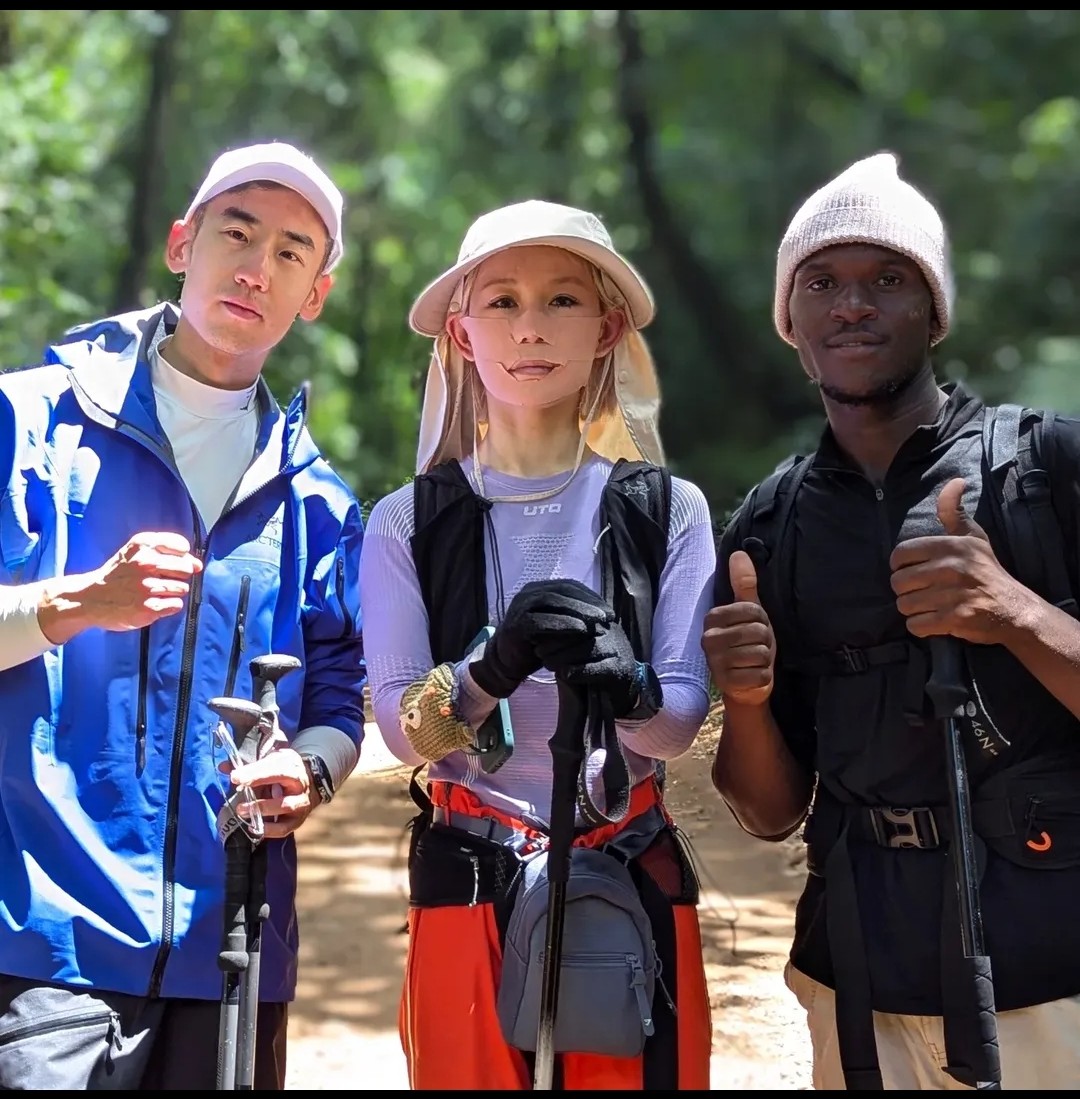
When you
finally arrive at Mweka Gate, it's time to celebrate your incredible
achievement. Your guides will assist you with the final park registration
before you receive your official Mount Kilimanjaro summit certificate, a
well-earned reward that recognizes your successful climb to Africa's highest
peak. This is the perfect moment to take photographs with your mountain crew,
celebrate together, and relive some of the unforgettable memories from the
journey.
From the
gate, our driver will be waiting to take you back to our office, where the
celebration continues. Your mountain crew will welcome you with traditional
songs and dancing to congratulate you on your achievement. It's a joyful and
emotional moment, as you've shared unforgettable days together on the mountain
and formed friendships that will always be part of your Kilimanjaro story.
This is also
the appropriate time to thank your guides, porters, cook, and waiter by
presenting their tips. Tipping is an important tradition on Mount Kilimanjaro
and a meaningful way to show appreciation for the dedication, hard work, and
care they provided throughout your climb.
After saying
goodbye to your mountain family, you'll be transferred back to your hotel for a
well-deserved hot shower, a comfortable bed, and one final relaxing night
before your departure. If your adventure in Tanzania isn't over yet, you can
also extend your journey by exploring some of the country's incredible
attractions. Many climbers choose to visit Materuni Waterfalls, relax in the
crystal-clear Chemka Hot Springs, enjoy an unforgettable wildlife safari in
Tanzania's famous national parks, or fly to the beautiful beaches of Zanzibar
for a few days of rest after conquering the Roof of Africa.
Although
your climb has come to an end, the memories of standing on Uhuru Peak, the
friendships made along the trail, and the spirit of Kilimanjaro will stay with
you for a lifetime. Once you've climbed Africa's highest mountain, a part of
your heart will always remain on Kilimanjaro.
What Is
the Difference Between the 6-Day and 7-Day Machame Route Itinerary?
At first
glance, the 6-day and 7-day Machame Route itineraries look almost identical.
You will follow the same trail, pass through the same camps, and reach the same
destination—Uhuru Peak. The only difference is how the section between Barranco
Camp, Karanga Camp, and Barafu Camp is scheduled.
If you look
at the 7-day itinerary, Day 4 is:
Day 4: Barranco Camp → Karanga Camp
On this day,
you will climb the famous Barranco Wall before continuing across beautiful
alpine valleys to Karanga Camp. Once you arrive, you will have enough time to
relax, enjoy dinner, and spend the night at approximately 3,995 meters. The
following morning, you will continue to Barafu Camp.
Now compare
that with the 6-day itinerary.
Day 4: Barranco Camp → Karanga Camp →
Barafu Camp
Your day
begins exactly the same way. You will climb the Barranco Wall and continue
hiking to Karanga Camp. When you arrive at Karanga Camp, you will stop for
lunch, refill your water bottles, and take a short break before continuing your
trek.
Instead of
spending the night at Karanga Camp, you will continue for approximately 4
kilometers (2.5 miles) to Barafu Camp. This section usually takes around 3
to 4 hours through the rocky alpine desert.
Once you
arrive at Barafu Camp, you will receive dinner, prepare your summit gear,
organize your warm clothing, check your headlamp and trekking equipment, and
get a few hours of rest before your summit push begins around midnight.
In short, I
can say that the only difference is that the 6-day itinerary does not include
an overnight stay at Karanga Camp. You still hike through Karanga Camp, have
lunch there, and take a short rest, but instead of sleeping there, you continue
directly to Barafu Camp on the same afternoon.
To make it
even easier to understand, compare the two itineraries below:
7-Day
Itinerary
Day 4: Barranco Camp → Karanga Camp (Overnight)
Day 5: Karanga Camp → Barafu Camp
6-Day
Itinerary
Day 4: Barranco Camp → Karanga Camp (Lunch & Short Rest)
→ Barafu Camp (Dinner & Overnight)
After you
reach Barafu Camp, both itineraries become exactly the same. You will have
dinner, make your final preparations, rest for a few hours, and wake up around
midnight to begin your summit ascent to Uhuru Peak.
Note:Whether you choose the 6-day or 7-day
Machame Route itinerary, you will follow exactly the same trail from start to
finish. The only difference is one day on the mountain. On the 7-day itinerary,
you will spend the night at Karanga Camp before continuing to Barafu Camp the
next day. On the 6-day itinerary, you will stop at Karanga Camp for lunch and a
short rest, then continue directly to Barafu Camp.